
Machines rarely fail without warning. Long before a motor grinds to a halt or a pump seizes, small signs creep in: a slight rise in temperature, an odd vibration, a faint change in sound that most people would walk straight past. Traditional maintenance teams often miss these early clues, simply because nobody is watching closely enough, often enough. That is precisely where smart condition monitoring steps in, catching the whisper before it becomes a shout.
For decades, industrial maintenance in Singapore has leaned heavily on a reactive model. Something breaks, a technician gets called, parts get replaced, and operations resume once the damage is fixed. It works, in the sense that the machine eventually runs again, but it is expensive, disruptive, and often avoidable. As facilities grow more complex and downtime grows more costly, businesses are quietly shifting towards a smarter, more predictive way of keeping equipment healthy.
The Real Cost of Reactive Maintenance
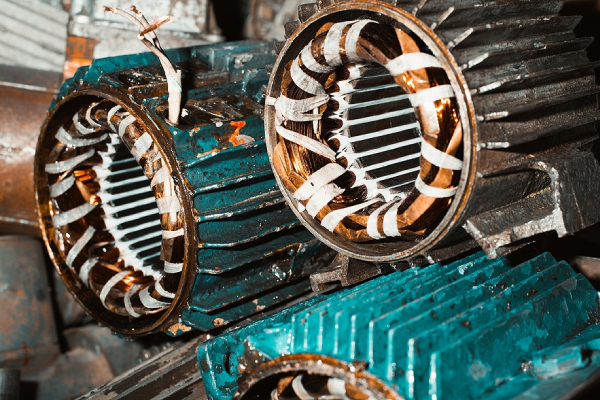
Reactive maintenance has a certain simplicity to it. Fix what breaks, when it breaks. There is no need for sensors, dashboards, or data analysis. But this simplicity comes at a steep price. A single unplanned outage can halt production lines, delay client deliveries, and rack up emergency repair costs that dwarf what routine servicing would have cost. Worse still, sudden failures rarely stay contained to one component. A neglected bearing can drag a coupling down with it, and an unnoticed problem such as electric motor winding failure can cascade into a full motor replacement, along with days of lost output while a suitable unit is sourced and installed.
How Condition Monitoring Works
Condition monitoring flips this script entirely. Rather than waiting for something to go wrong, sensors and monitoring systems keep a constant watch over the health of critical equipment. Vibration analysis, thermal imaging, oil analysis, and acoustic monitoring all feed data back to engineers in near real time. Patterns that would be invisible to the human eye or ear become obvious on a screen, giving maintenance teams a genuine head start.
Take vibration monitoring as an example. Every rotating machine has a vibration signature that stays fairly consistent when everything is working as it should. When a bearing starts to wear, or a shaft becomes slightly misaligned, that signature shifts. Sensors pick up these shifts long before they become audible or visible, flagging the issue while it is still a minor fix and not yet a major overhaul. Thermal imaging works in a similar way, spotting hotspots on electrical panels or motor housings that often point to loose connections, overloading, or insulation breakdown.
Why Electric Motors Deserve Extra Attention
This kind of early detection carries particular weight for electric motors, which sit at the heart of so many industrial processes in Singapore, from manufacturing lines to HVAC systems to water treatment plants. Motors are workhorses, and they tend to run for years without much attention, right up until they stop. One of the more costly failure modes engineers watch for is winding failure, where the insulation on the copper windings inside the motor breaks down due to heat, moisture, contamination, or age. Left unchecked, this can lead to short circuits, complete motor burnout, and unplanned downtime that ripples across an entire operation. Condition monitoring systems can track subtle signs such as rising winding temperatures or shifts in electrical resistance, giving teams a chance to intervene with targeted maintenance instead of a full motor swap.
The Tools Behind Smart Monitoring
So what does smart condition monitoring actually look like on the ground? Here are a few of the tools commonly used across Singapore facilities:
- Vibration sensors that detect imbalance, misalignment, and bearing wear in rotating machinery
- Infrared thermography that flags overheating components before they fail
- Oil analysis that reveals contamination or wear particles in lubricants and hydraulics
- Ultrasonic detectors that pick up early signs of electrical arcing or gas leaks
- Motor current signature analysis that spots developing electrical faults inside motors
None of these tools work in isolation. The real value comes from combining them into a single monitoring strategy, feeding data into a central system that engineers can review and act on. Some facilities now use predictive analytics and machine learning to spot trends across months or years of data, flagging equipment that is drifting towards failure long before any alarm would normally sound.
The Financial and Safety Case
There is a financial argument here too, and it tends to win over sceptical management fairly quickly. Unplanned downtime is expensive, often far more expensive than the cost of the monitoring equipment itself. When a facility can plan a maintenance window in advance rather than scrambling after a breakdown, it saves on emergency labour rates, rush-ordered parts, and the knock-on costs of delayed production. Spare parts can be ordered ahead of time instead of at a premium during a crisis, and technicians can schedule repairs around production needs instead of around a breakdown that has already happened.
There is also a safety dimension that deserves more attention than it usually gets. A motor running hot, a panel with a failing connection, or a pump vibrating out of tolerance are not just efficiency concerns. They can pose real risks to the people working near them. Catching these issues early through condition monitoring protects equipment and protects the workforce operating it.
A Natural Fit for Singapore’s Smart Manufacturing Push
Singapore’s push towards smart manufacturing and Industry 4.0 has made this shift easier to justify. Many facilities already have some digital infrastructure in place, and adding sensors and monitoring software is often a natural extension rather than a complete overhaul. Government support for automation and digitalisation has also lowered the barrier for smaller facilities that might otherwise have written off condition monitoring as too costly or too complex.
Getting the Balance Right
None of this means reactive maintenance disappears completely. Some equipment is simple enough, or cheap enough to replace, that constant monitoring would not make financial sense. The goal is not to monitor everything, but to identify which assets carry the highest risk if they fail unexpectedly, and to focus monitoring efforts there. A well planned strategy blends predictive tools for critical machinery with straightforward reactive fixes for lower stakes equipment.
For facility managers weighing up their options, the starting point is usually a review of which machines cause the most disruption when they fail. Motors, pumps, compressors, and switchgear tend to top that list in most industrial settings. From there, choosing the right mix of sensors and monitoring tools becomes a much more manageable task.
If your facility is still relying mainly on reactive repairs, now is a good time to have a conversation about what condition monitoring could look like for your equipment. MES works with businesses across Singapore on transformers, switchgear, motors, and generator installations, helping teams move from unpredictable breakdowns to planned, proactive maintenance. Contact us to find out how condition monitoring could work for your facility.

Linkedin Profile 