
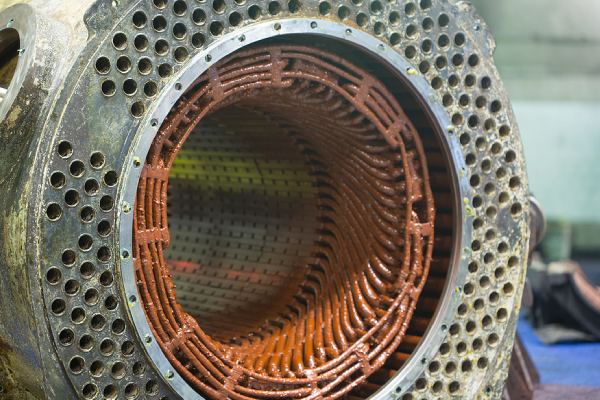
Electric motors are workhorses. They power conveyor belts, pumps, compressors, HVAC systems, and countless other pieces of industrial equipment that keep operations running day after day. Most of the time, they do their job quietly and reliably. But when something goes wrong, it tends to go wrong at the windings, and the consequences can be costly.
Understanding why winding failure happens is the first step towards preventing it. Whether you manage a manufacturing facility, oversee building maintenance, or simply want to get more life out of your equipment, knowing the warning signs and root causes puts you in a much stronger position.
What Are Motor Windings, and Why Do They Matter?
Windings are coils of insulated copper (or sometimes aluminium) wire wound around the motor’s stator or rotor. When energised, they generate the magnetic field that drives the motor. The insulation around these coils is what keeps everything working properly. When that insulation degrades or breaks down, you get a short circuit, and the motor fails. This is precisely why electric motor rewinds are one of the most requested services in industrial motor repair, accounting for roughly 32% of all AC electric motor repairs.
If you operate motors in demanding environments, it is worth taking the time to prepare your motor properly and understand the conditions most likely to cause damage.
Overheating: The Number One Culprit
Ask any engineer what kills motor windings, and the answer is almost always heat. Leading standardisation organisations have concluded that 30% of motor failures are attributed to insulation failure, and 60% are caused by overheating issues.
The reason heat is so destructive comes down to a well-established principle: for every increase of 10°C above a motor’s rated winding temperature, the life of the motor’s winding insulation is reduced by up to 50%. That means even temporary overheating has a lasting impact on how long your motor will last.
Overheating can be caused by a number of factors, including running the motor beyond its designed output limits, insufficient ventilation, blocked cooling vents, or heat generated by nearby machinery. In Singapore’s consistently warm and humid climate, ambient temperature is an additional variable that deserves attention.
Overloading and Excessive Starts
Running a motor harder than it was designed to handle puts enormous stress on the windings. During start-up, a motor typically sees between six to eight times its rated current, which increases thermal stress on the windings and contributes to motor failure.
When a motor is started and stopped repeatedly in a short period, this thermal stress accumulates. Each start cycle generates a surge of current, and if the motor does not have sufficient time to cool down between cycles, the insulation deteriorates faster than it should. Darkened areas on the windings are a telltale sign that overheating has already occurred.
Voltage Imbalance and Electrical Stress
Even when a motor is running within its load limits, electrical issues can silently degrade the windings over time. An imbalance in impedance or load distribution can contribute to imbalance across all three phases in a three-phase power system, leading to excessive current flow in one or more phases that increases operating temperatures and causes insulation breakdown.
Voltage spikes and transient surges are another concern. These transients vary in amplitude and frequency and can erode or cause insulation breakdown in motor windings, sometimes appearing intermittently and presenting themselves in various ways. Because they are not always easy to detect, the damage can go unnoticed until the motor eventually fails.
Contamination
Contamination is one of those problems that sneaks up on you. Dust, dirt, moisture, oil mist, and chemical vapours can all find their way into a motor enclosure over time, particularly in industrial environments. Excessive dirt build-up on the motor exterior and cooling fins acts as insulation, raising internal operating temperatures, while condensation and moisture can contaminate the motor’s grease or oil supply.
Motors that drive water pumps or are floor-mounted should be checked to ensure that dirt, water spray, or misting is not being drawn into the motor from leaking packing, mechanical seals, or floor debris. This can cause moistened or dirty air to be sent across the windings during operation, leading to deposits on the windings and eventual failure.
In environments where chemicals or solvents are present, the risk is even higher, as certain substances actively attack insulation materials.
Physical Damage and Poor Installation
Sometimes winding failure is not caused by gradual wear but by something more immediate: physical damage. Rough handling during transport or installation, incorrect reassembly after maintenance, or foreign objects entering the motor casing can all cause direct damage to the windings or their insulation.
Poor installation is particularly worth watching out for. A motor that is not properly aligned, incorrectly coupled, or mounted on an uneven surface can experience vibration that stresses the windings over time, even if the motor itself is in good condition.
Ageing Insulation
All insulation has a service life, and even a well-maintained motor will eventually reach the point where its insulation can no longer do its job. The cumulative effect of heat cycles, electrical stress, moisture exposure, and general wear takes a toll. Over time, the insulation around motor windings can degrade and break down, causing an electrical short and eventual motor failure.
Regular testing of insulation resistance, particularly on motors that have been in service for several years, is one of the most reliable ways to catch deterioration before it leads to failure.
What You Can Do
Prevention is straightforward when you know what to look for. Here are the most effective measures:
- Keep motors operating within their rated load and temperature limits
- Ensure cooling vents and air pathways are clear and unobstructed
- Monitor for voltage imbalances and transient surges in your power supply
- Inspect motors regularly for signs of contamination, moisture ingress, or physical damage
- Test insulation resistance periodically, especially on older motors
- Avoid excessive start-stop cycles where possible
Conclusion
Winding failure rarely happens out of nowhere. In most cases, there is a build-up of stress, whether thermal, electrical, mechanical, or environmental, that eventually tips the balance. The good news is that most causes are preventable with proper maintenance and timely intervention.

Linkedin Profile 