
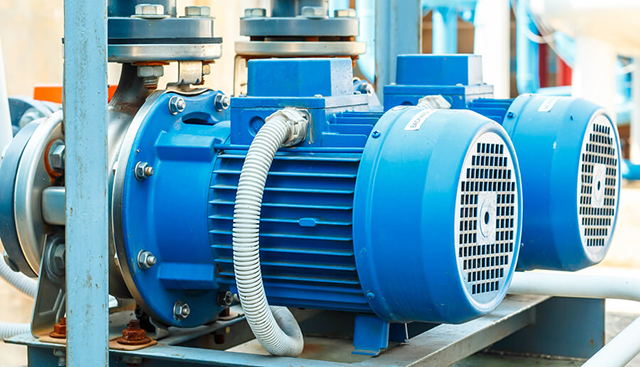
Warehouses and industrial sites deal with all sorts of risks, and hazardous locations are near the top of that list. If your facility stores flammable gases, combustible dust or anything else that could spark trouble, a standard motor simply won’t cut it. You need one built to contain an explosion rather than cause one.
Picking the right explosion-proof motor can feel like a maze of classes, divisions and certifications, especially if you’re new to it. The good news is that once you break it down step by step, it’s a lot more manageable than it looks. Here’s a straightforward guide to help you choose wisely and keep your team safe.
Start With The Classification
Before anything else, you’ll want to work out which class your motor needs to fall under. There are three main classes to know:
- Class I covers locations with explosive vapours or flammable gases, think petroleum storage or gasoline plants.
- Class II applies to areas with large amounts of combustible or electrically conductive dust, such as grain elevators or starch production sites.
- Class III is designed for places where fibres or flyings like sawdust are common, such as textile mills or flax processing plants. These motors are built to keep dust out and stop internal temperatures from climbing to dangerous levels.
Getting the class right from the start sets the foundation for everything else on this list.
Check The Code Letters And Division
Once you’ve nailed down the class, take a closer look at the code letters, since these help match the motor to the specific combustible substances found in your environment.
You’ll also need to identify the division. A Division I location is hazardous under normal operating conditions, where flammable gases or dust are present as a matter of course. A Division II location only becomes risky when something goes wrong, such as a leak, spill or equipment failure that releases flammable material unexpectedly.
From there, the Group chart comes into play. This looks at how the hazardous material behaves and how easily it ignites. Groups A to D relate to Class I environments, while Groups E to G apply to Class II locations. Matching your motor to the correct group ensures it’s genuinely fit for purpose, rather than just technically similar.
Look For The Right Certifications
A motor might tick every box on paper, but if it isn’t properly certified, it shouldn’t go anywhere near a hazardous area. In Singapore, look for testing and certification from a body accredited under the Singapore Accreditation Council (SAC-SINGLAS) scheme, and check that the motor complies with TR25, Singapore’s Technical Reference for equipment used in hazardous locations.
An International Electrotechnical Commission Explosive (IECEx) certification is another good sign, and one of the most widely recognised standards used by facilities here. It shows the motor has been tested to international standards and that the manufacturing facility itself has been inspected to confirm its quality systems are up to scratch.
If a motor ever needs to be re-certified to meet TR25 or IECEx requirements, that’s when your electric motor needs an overhaul, and it should be sent to a service centre experienced in this kind of work, ideally one familiar with Singapore’s regulatory requirements, so it can be brought back to its original class and group.
Get A Thorough Check From The Service Centre
Motors go through wear and tear, mechanical adjustments and the occasional rebuild, and each of these can affect their ability to contain an explosion if something goes wrong. That’s why any ex-proof motor overhaul should only be handled by a UL-approved service centre with the right experience and equipment.
Ask the service centre to carry out winding-over service protection on any reconstructed motor to help preserve its explosion-suppressing capabilities. If the rebuild is more involved, they may need to source specific electric motor parts, so working with an established engineering company in Singapore can make the process smoother and more reliable.
At the end of the day, the goal here is simple: make sure a qualified professional signs off on every check, so the motor performs exactly as it should once it’s back in service.
Don’t Overlook The Autoignition Temperature
This is where that Group chart comes in handy again. Every hazardous material has an Autoignition Temperature (AIT), the minimum temperature at which it can catch fire on its own, without any spark, flame or other ignition source nearby.
Understanding the AIT for the materials in your facility helps you choose a motor that can safely operate in that environment without becoming a fire risk itself. It’s a small detail, but it plays a big role in keeping everyone on site protected.
A Quick Reference
| Step | What To Check |
| 1 | Class of motor (I, II or III) |
| 2 | Division and Group chart |
| 3 | UL, ANSI and IECEx certification |
| 4 | Service centre credentials for overhauls |
| 5 | Autoignition Temperature of materials on site |
Why This All Matters for Your Team
Every warehouse with a hazardous location carries some level of risk, and choosing the wrong motor for that space only adds to it. Poor decisions here can lead to costly accidents, equipment damage, and in the worst cases, injuries or worse. Taking the time to classify your environment correctly, verify certification, and schedule proper maintenance is a small investment that protects your people and your operations for years to come.

Linkedin Profile 