
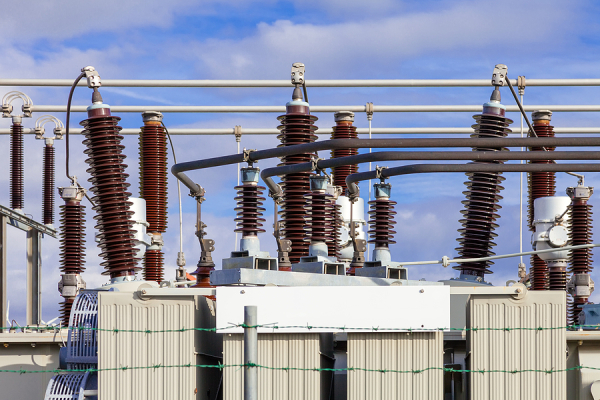
Transformers hum away quietly in the background of most businesses, and unless something goes wrong, they rarely get a second thought. But the fluid inside that transformer is doing more work than most people realise. It cools the equipment, insulates it, and helps it run safely for years on end.
If you’re weighing up your options for transformer fluid, you’ve probably come across two main contenders: mineral oil and natural ester fluids. Both get the job done, but they go about it quite differently, and the right choice depends on where your transformer sits, how it’s used, and what risks you’re trying to manage. Let’s break it down in plain terms.
A quick bit of history
Mineral oil has been the standard choice for electric transformer cooling since the 19th century, when engineer Elihu Thomson patented its use to draw heat away from the core and keep the machine running longer. It’s cheap, widely available, and manufacturers have been refining it for well over a hundred years.
More recently, natural ester and synthetic fluids have started gaining ground. Products like Cargill’s FR3 dielectric fluid have shown real promise, offering some practical advantages over traditional mineral-based options. That’s why more engineers and facility managers are giving them a proper look.
Why natural esters are catching on
There are two big reasons natural and synthetic esters have grown in popularity.
First, they have a much higher flash point and fire point than mineral oil, often double. That makes them a safer bet for both indoor and outdoor installations where fire risk is a genuine concern.
Second, these fluids are biodegradable. This matters a great deal for transformers installed near water sources, dams, or other environmentally sensitive areas, since it can remove the need for expensive containment structures built to hold 110% of nameplate capacity. And if a leak or failure does happen, the environmental impact is far smaller than with conventional oil.
The advantages of natural ester fluids
Longer equipment life
Every business wants its electrical equipment to last, and that’s where natural esters have a genuine edge. These dielectric fluids are remarkably stable and offer higher cooling capacity than standard hydrocarbon oils or high-molecular-weight silicone fluids.
In fact, transformers using FR3 with thermally upgraded insulation paper can last around eight times longer than those filled with mineral oil. That’s a significant difference for any business planning long-term equipment budgets. Of course, this only holds true if oxygen and moisture levels are kept low, the same maintenance basics that apply to mineral oil transformers too.
Better protection against moisture
Moisture is the number one enemy of a transformer’s solid insulation. Natural ester fluids handle this brilliantly. They keep less moisture trapped in the paper insulation and hold more of it within the fluid itself, which keeps the most critical parts of the transformer drier for longer.
To put some numbers on it, Cargill’s FR3 can hold around 1,000 parts per million (ppm) of moisture at room temperature, compared to roughly 50 ppm for typical mineral oils. When moisture levels are high, esters actually form long-chain fatty acids that create new ester links over the solid insulation. This acts as a protective layer, helping shield the equipment from decay down the line. Left unchecked, excess moisture is often the reason a transformer requires immediate repair, so this added protection can make a real difference over the equipment’s lifetime.
Can you retrofit a mineral oil transformer with ester fluid?
Good news here: based on extensive lab and field testing, transformers running on mineral oil, and even R-temp or high-temperature hydrocarbon fluids, can generally be retrofitted with ester fluids.
Making the switch brings a few worthwhile benefits:
- Slower ageing process for the transformer
- Improved short-term overloading capability
- Reduced environmental risk if a leak occurs
That said, compatibility is something you can’t skip. Not every fluid mixes well with another. Silicone, for example, doesn’t blend with other fluids at all. Top off a mineral oil-filled transformer with silicone and you’ll end up with something that looks more like a lava lamp than a functioning coolant.
If you’re at all unsure, get a professional involved before making any changes. The same logic applies here as it would for motor rewinds or other specialist electrical work: some jobs are best left to people who do this every day.
Mineral oil or natural ester: which should you choose?
There’s no universal right answer, but a few questions can help point you in the right direction:
| Consideration | Mineral oil | Natural ester |
| Upfront cost | Lower | Higher |
| Fire safety | Standard | Higher flash/fire point |
| Environmental impact | Higher risk if leaked | Biodegradable, lower risk |
| Equipment lifespan | Standard | Potentially much longer |
| Availability | Widely available | Growing but more limited |
If your transformer sits somewhere with strict fire safety requirements, or near water and other sensitive environments, natural esters are likely worth the extra investment. If cost and availability are your main concerns, mineral oil remains a dependable and well-understood choice.
Final thoughts
Change in the transformer world tends to happen slowly, and that’s understandable given how much is riding on this equipment staying reliable. Mineral oil isn’t going anywhere soon; it’s cheap, familiar, and readily available from countless manufacturers. But the momentum behind ester-based alternatives is real, and more organisations are starting to explore what they could mean for their own equipment.

Linkedin Profile 