
Electrical safety is something that many businesses take for granted, right up until something goes wrong. For facilities running older electrical infrastructure, one of the most serious and underappreciated hazards is arc flash, a violent release of energy that can occur without warning and with devastating consequences. What makes this particularly concerning is that ageing switchgear panels, many of which are still in active use across industrial sites in Singapore, are among the highest-risk environments for arc flash incidents to occur.
The challenge is that switchgear does not always show obvious signs of deterioration from the outside. A panel that looks perfectly functional on the surface may be harbouring insulation breakdown, corroded contacts, or loose connections that have developed over years of use. By the time these faults become visible, the risk of a dangerous fault condition is already elevated.
Understanding what arc flash is, why older switchgear is especially vulnerable, and what you can do to manage the risk is essential knowledge for anyone responsible for electrical safety in a facility.
What Is Arc Flash, and Why Is It So Dangerous?
Arc flash occurs when electrical current travels through the air between two conductive points, rather than through its intended path. The result is an explosive release of energy in the form of intense heat, blinding light, pressure waves, and molten metal. Temperatures at the arc point can reach several times hotter than the surface of the sun, which means that even brief exposure can cause severe burns, hearing loss, or worse.
It is not purely a theoretical risk. Arc flash incidents cause serious injuries to electrical workers globally every year, and the consequences extend beyond the individual. Facilities face equipment damage, operational downtime, regulatory scrutiny, and in serious cases, significant legal liability. Industrial switchgear safety is a key consideration for any site running medium or high-voltage equipment, particularly where older panels are still in service.
Why Ageing Switchgear Raises the Risk
New switchgear is designed and tested to handle fault conditions with a degree of built-in resilience. Over time, however, several factors combine to erode that resilience:
Insulation degradation — The insulating materials inside switchgear panels break down over years of thermal cycling, moisture exposure, and general wear. Degraded insulation is far more likely to allow unintended current paths to develop.
Contaminant build-up — Dust, moisture, and industrial pollutants accumulate inside panels, especially in Singapore’s humid climate. Conductive contamination on busbar surfaces or between contacts can significantly increase arc flash risk.
Mechanical wear — Circuit breakers and disconnects have rated operating cycles. Beyond those limits, the mechanical reliability of the device drops, meaning that it may not operate as intended during a fault, allowing more energy to be released.
Outdated protection settings — Older switchgear may have been installed before current arc flash standards were established. Protection relay settings that made sense decades ago may no longer be adequate for the current fault levels on a site.
Lack of arc flash ratings — Much of the switchgear installed in Singapore’s older industrial facilities pre-dates the requirement for arc flash incident energy ratings. Without this data, workers and engineers have no reliable basis for selecting appropriate personal protective equipment (PPE) or establishing safe work procedures.
The Role of Switchgear Testing
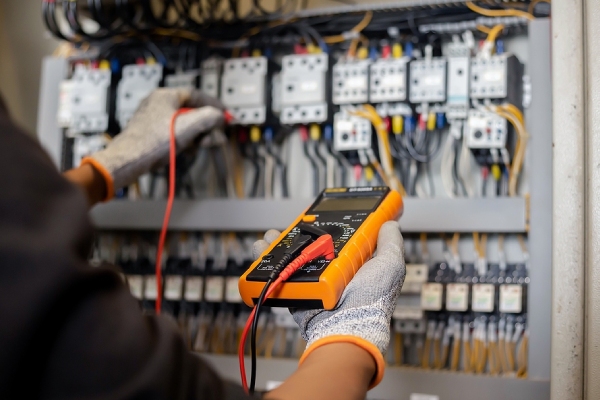
One of the most important steps in managing arc flash risk in ageing panels is regular switchgear testing. Testing serves a dual purpose: it identifies deterioration that is not visible during a routine inspection, and it provides the data needed to understand how a panel will behave under fault conditions.
Insulation resistance testing, contact resistance testing, and circuit breaker timing tests all contribute to a clearer picture of a panel’s condition. When combined with a proper arc flash hazard analysis, this data allows engineers to calculate incident energy levels, determine appropriate working distances, and specify the correct PPE for anyone who needs to work on or near the equipment.
In Singapore, the Energy Market Authority sets out requirements for electrical safety under the Electricity Act, and facilities are expected to maintain their electrical systems in safe working condition. Regular testing is not just good practice; it is part of meeting those obligations.
It is also worth noting that arc flash risk is not static. Changes to the supply network, additions to on-site generation, or modifications to protection systems can all alter the incident energy at a given point in the installation. This means that a one-off analysis carried out years ago may no longer reflect the current risk profile, particularly for older switchgear that has seen changes in its operating environment.
Practical Steps for Managing the Risk
If you are responsible for a facility with ageing switchgear, there are several practical measures worth prioritising:
- Commission an arc flash hazard analysis to establish current incident energy levels and identify which panels present the highest risk.
- Review protection relay settings to ensure that fault clearance times are as short as possible, which directly reduces the energy released in an arc flash event.
- Establish clear safe work procedures for any tasks that require interaction with live panels, including appropriate PPE requirements based on the hazard analysis.
- Consider a switchgear condition assessment to determine whether older panels should be refurbished, replaced, or fitted with additional protective devices such as arc flash detection relays.
- Train your team so that electrical workers understand arc flash risks and know how to identify warning signs such as unusual sounds, smells, or visible discolouration around panels.
Knowing When to Act
There is a tendency in many facilities to defer maintenance and assessment on electrical infrastructure that appears to be functioning normally. With arc flash, this is a particularly risky approach. The nature of the hazard means that a panel can appear completely operational right up until the moment a fault occurs.
For switchgear that is 20 years old or more, the question is rarely whether a condition assessment is necessary, but rather how soon it should happen. Taking a proactive stance, rather than a reactive one, is both safer and more cost-effective in the long run.
Take the Next Step
Ageing switchgear does not have to be a liability, but it does need to be managed carefully and with the right expertise. Getting informed guidance from people who understand the risks makes all the difference. MES works with facilities across Singapore to assess, maintain, and improve electrical systems. Visit https://www.mes.com.sg/ to find out how we can help you get ahead of the risk before it becomes a problem.

Linkedin Profile 