
Choosing the right electric motor repair provider is one of those decisions that feels straightforward until something goes wrong. Whether you manage a manufacturing plant, a water treatment facility, or any operation that depends on rotating machinery, the quality of your repair provider directly affects your uptime, your safety, and your bottom line. So before you hand over a critical motor to just any workshop, it is worth knowing what good actually looks like.
They Should Stock or Source Quality Electric Motor Spare Parts
A repair job is only as good as the components that go into it. One of the clearest signs of a reputable provider is their access to quality electric motor spare parts. Whether they hold common parts in stock or have established relationships with trusted suppliers, they should never be cutting corners by sourcing cheap, unverified components.
Ask them directly: where do your parts come from? A confident, transparent answer is what you want. Vague responses or a reluctance to discuss sourcing should raise a flag. The best providers will often specify whether parts meet OEM standards or are equivalent alternatives, and they will explain the difference to you without making you feel like you are asking a silly question.
Proper Diagnostic Processes Come First
Before any repair work begins, a quality provider will carry out a thorough assessment of your motor. This is not just a visual once-over. It should include insulation resistance testing, winding resistance checks, bearing condition evaluation, and vibration analysis where appropriate.
Why does this matter? Because jumping straight to repair without proper diagnostics often means treating symptoms rather than causes. You might get your motor back, only to find it fails again within months because the root problem was never identified. Good diagnostics also give you a clearer picture of whether repair is actually the right call, or whether replacement makes more economic sense.
Technicians Should Be Trained and Experienced
There is no substitute for genuine expertise. The people working on your motors should have formal training in electromechanical systems, and ideally, hands-on experience with motors similar to yours in size, type, and application.
This matters particularly for:
- High-voltage motors, which carry significant safety risks if handled incorrectly
- Specialised motor types such as explosion-proof or inverter-duty motors, which have specific repair requirements
- Large industrial motors, where a mistake in rewinding or balancing can cause catastrophic failure
Do not be shy about asking for credentials or asking how long their technicians have been doing this work. A good provider will not take offence.
They Should Follow Recognised Industry Standards
Reputable motor repair workshops operate in line with established standards. In the context of electric motor repair, this typically means adherence to guidelines set by bodies such as the Electrical Apparatus Service Association (EASA), particularly EASA AR100, which covers the rewinding and repair of AC motors.
Following these standards ensures that a repaired motor performs at least as efficiently as it did when it left the factory, and in some cases better. It also gives you a degree of accountability: if a provider is working to a recognised standard, there is a benchmark against which their work can be measured.
Rewinding Should Not Cost You Efficiency
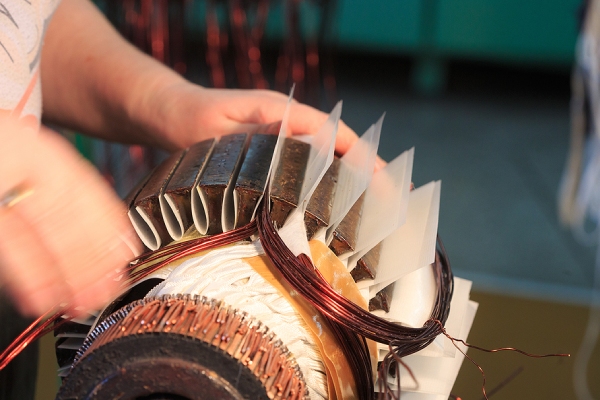
One concern that often comes up around motor rewinding is efficiency loss. Done poorly, rewinding can degrade a motor’s performance, leading to higher energy consumption over time. A provider who follows best practices, including using the correct wire gauge, winding configuration, and core treatment methods, should be able to return your motor to its original efficiency rating or better.
This is worth asking about upfront. If a provider cannot explain how they protect motor efficiency during rewinding, that tells you something important.
Post-Repair Testing Is Non-Negotiable
The work is not finished when the motor is put back together. Any provider worth trusting will conduct a full suite of post-repair tests before the motor leaves their workshop. This includes no-load running tests, final insulation resistance checks, and verification that the motor meets its rated specifications.
For motors that will be used in critical applications, some providers also offer load testing, which gives you even greater confidence that performance in the field will match expectations. Safe and efficient motor installation depends in part on knowing the motor has been properly validated before it ever gets connected.
Clear Communication and Documentation
Good repair work should come with clear paperwork. You should receive a detailed report covering what was found during inspection, what work was carried out, which parts were replaced, and the results of post-repair testing. This documentation is not just bureaucracy; it is a record that supports maintenance planning, warranty discussions, and future repair decisions.
A provider who cannot or will not supply this level of documentation is one you should think twice about using, especially for motors in regulated or safety-critical environments.
Realistic Lead Times and Honest Timelines
Nobody wants to be kept in the dark when their production line is sitting idle. A trustworthy provider will give you a realistic timeline from the start and keep you updated if anything changes. Overpromising and underdelivering is unfortunately common in the repair industry, so a provider who is upfront about lead times, even when the news is not what you were hoping to hear, is actually demonstrating integrity.
Warranty on Repair Work
Any reputable provider should stand behind their work with a warranty. The specifics will vary, but a warranty of at least six to twelve months on parts and labour is a reasonable expectation for most repair jobs. Make sure you understand what is covered and under what conditions before you sign off on the work.
The Bottom Line
Finding a motor repair provider who genuinely meets these standards takes a bit of effort upfront, but it pays off in reliability, efficiency, and peace of mind over the long run. Do not let cost be the only factor in your decision. A cheap repair that fails in three months will cost you far more than a properly done job the first time.

Linkedin Profile 