
Operating rotating equipment in Singapore comes with inherent risks. Continuous exposure to moisture and elevated temperatures places sustained stress on motor components, often leading to corrosion, insulation damage, and premature motor failure. For electric motors operating in such an environment, insulation quality is not a nice-to-have feature. It is a defining factor in reliability and lifespan.
Among the various insulation methods available today, Vacuum Pressure Impregnation (VPI) consistently stands out as the most robust and dependable solution. For motors expected to operate continuously in Singapore’s tropical conditions, VPI is not just a preferred option. It is the only choice that truly holds up over time.
Understanding The Challenge Of Tropical Humidity
Singapore regularly experiences relative humidity levels above 80 percent. Moisture finds its way into everything, including motor windings, terminal boxes, and insulation systems. Traditional insulation methods struggle under these conditions because they rely on surface coatings or partial impregnation that leaves microscopic air pockets behind.
These air gaps allow moisture ingress, which leads to insulation weakening, partial discharge, corrosion of conductors, and eventual electrical failure. Over time, even motors that appear mechanically sound can suffer catastrophic breakdowns simply because moisture has compromised the insulation system.
This is why insulation design must be considered with climate in mind, not just electrical rating or efficiency class.
What Is Vacuum Pressure Impregnation (VPI)
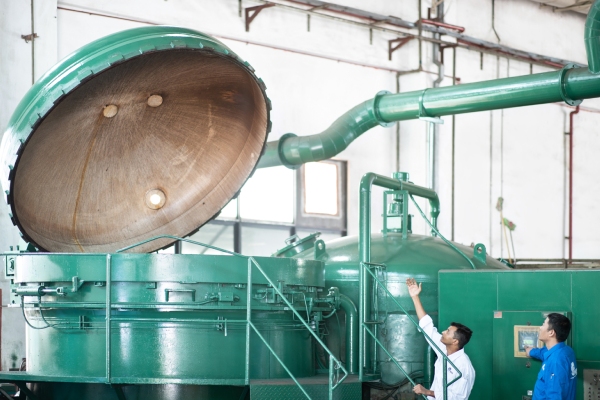
Vacuum Pressure Impregnation is a process that fully saturates motor windings with insulating resin. The motor stator is placed in a sealed chamber where a vacuum removes air and moisture from the windings. Resin is then introduced under pressure, forcing it deep into every crevice of the insulation system.
The result is a fully bonded, void-free insulation structure that resists moisture, vibration, thermal cycling, and chemical exposure. Unlike dip-and-bake or trickle impregnation methods, VPI does not rely on gravity or surface wetting. It creates a complete, homogeneous insulation barrier.
For motors operating in humid, industrial environments like Singapore, this difference is critical.
Why Conventional Insulation Methods Fall Short
Many motors used in tropical regions still rely on basic impregnation techniques that were never designed for constant humidity exposure. These methods often leave unfilled voids within the windings. While the motor may pass factory testing, long-term performance tells a different story.
Moisture accumulation inside insulation systems accelerates ageing and reduces dielectric strength. This leads to increased partial discharge activity, higher operating temperatures, and unpredictable failures. When paired with mechanical stresses from load variation or misalignment, insulation degradation happens even faster.
From a maintenance perspective, these failures are difficult to predict and costly to repair.
VPI As A Defence Against Moisture Ingress
The primary advantage of VPI lies in its resistance to moisture penetration. By eliminating internal air pockets, VPI removes the pathways that allow humidity to settle inside the insulation system.
Fully impregnated windings are less hygroscopic and far more stable under fluctuating temperature and humidity conditions. This is particularly important in Singapore, where motors may move between air-conditioned indoor environments and warm, humid outdoor installations.
The enhanced insulation integrity also means motors retain their dielectric strength over a much longer operating life.
Improved Mechanical Strength And Vibration Resistance
Humidity is not the only challenge faced by motors in industrial applications. Mechanical vibration, frequent starts and stops, and load changes all place stress on windings.
VPI creates a solid bond between conductors and insulation, significantly improving mechanical rigidity. Windings are less likely to shift, rub, or loosen over time. This directly reduces wear and the risk of insulation abrasion.
When paired with condition monitoring practices such as electric motor vibration analysis, maintenance teams gain deeper insight into both mechanical and electrical health. VPI-treated motors tend to show more stable vibration signatures, making anomalies easier to detect before failures occur.
Thermal Performance In Hot And Humid Conditions
Singapore’s ambient temperatures add another layer of stress to motor insulation. Heat accelerates insulation ageing, especially when combined with moisture.
VPI improves thermal conductivity by ensuring intimate contact between conductors and insulation. Heat is dissipated more evenly throughout the stator, reducing hot spots that can damage windings over time.
Lower operating temperatures translate directly into longer insulation life, improved efficiency, and reduced risk of sudden breakdowns during peak loads.
Reliability That Supports Predictive Maintenance
Modern maintenance strategies rely on predictability. Unexpected motor failures disrupt operations, increase downtime, and inflate repair costs.
VPI motors provide a more stable baseline for condition monitoring tools, including insulation resistance testing, partial discharge measurement, and vibration analysis. Because the insulation system is inherently more robust, changes in measured parameters are more meaningful and easier to interpret.
This allows maintenance teams to plan interventions rather than react to failures, a key advantage in industries where uptime is critical.
Why VPI Makes Sense For Singapore Industries
Singapore’s industrial landscape includes water treatment plants, petrochemical facilities, data centres, manufacturing lines, and marine applications. Many of these environments combine humidity, heat, chemical exposure, and continuous operation.
In such conditions, the cost of a motor failure far outweighs the initial investment in superior insulation. VPI offers a practical, proven way to protect motors against the realities of the local climate.
Rather than treating humidity as an unavoidable risk, VPI addresses it at the root by strengthening the insulation system itself.
Long-Term Cost Efficiency And Lifecycle Value
While VPI motors may carry a higher upfront cost compared to conventionally insulated alternatives, their total cost of ownership is significantly lower.
Extended service life, reduced maintenance frequency, fewer unplanned outages, and improved reliability all contribute to long-term savings. For facilities operating large motor fleets, these benefits scale quickly.
In Singapore’s competitive industrial environment, reliability is not optional. It is a strategic advantage.
The Clear Choice For Tropical Reliability
When motors are expected to operate year-round in high humidity, insulation quality becomes non-negotiable. VPI has consistently proven itself as the most effective insulation method for tropical climates.
By resisting moisture ingress, improving mechanical strength, enhancing thermal performance, and supporting predictive maintenance, VPI delivers the reliability that Singapore’s industries demand.
For organisations looking to protect their motor assets and reduce long-term risk, VPI is not just the best option. It is the only choice that truly makes sense.
To learn more about VPI motors, insulation systems, and reliability solutions tailored for Singapore’s operating conditions, explore the technical insights and services available from MES.