
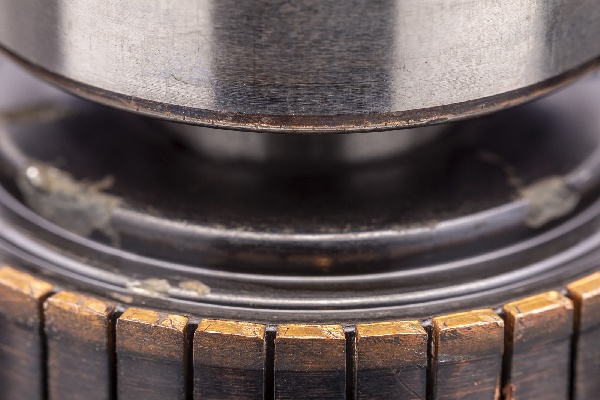
Industrial electric motors are modern workhorses that generate a lot of heat. Under normal conditions, motors dissipate generated heat within design limits. However, when operating stressors push internal temperatures beyond safe thresholds, thermal damage becomes a real threat that can damage insulation and components, shorten a motor’s lifespan, and potentially drive costly downtime.
In fact, thermal stress is one of the most common causes of electric motor failure in industrial settings. Without proper protection, even short exposure to overheating can trigger the onset of insulation breakdown, bearing distress, and many other issues that ultimately lead to cascading failures. That’s why selecting the right thermal protection is an essential step in guarding your assets, maintaining reliability, and controlling lifecycle costs.
Below, we explore how overheating affects motors, various thermal protection strategies, and how to match protection to your application.
What Happens if an Electric Motor Overheats?
There are many reasons why motors overheat. If left unchecked, it can affect every component of a motor and thus cause a wide range of issues that all culminate into eventual failure that may require an electric motor rewind or a comprehensive overhaul. Some of the most prominent consequences of overheating include:
- Insulation degradation: Elevated temperature accelerates chemical ageing of insulation systems, reducing dielectric strength and shortening motor life.
- Distortion and warpage: Heat can induce mechanical stress, deforming windings, end-turns, or the stator core.
- Bearing damage: High temperatures affect lubricant viscosity, cause thermal expansion, and degrade seals.
- Thermal runaway: A small temperature rise increases losses, which in turn generate more heat, resulting in a self-reinforcing cycle.
- Operational disruption: Unexpected trips, derating, or shutdowns reduce throughput and may require unplanned maintenance.
Even “mild” overtemperature excursions, repeated over time, may lead to latent damage, meaning a motor might fail even after months of apparently normal operation. External overload relays or fuses alone may not catch gradual thermal stress or internal hot spots, making built-in thermal protection indispensable. Hence, proactive thermal modelling, monitoring and protection are essential, especially in critical or continuously operated assets.
Understanding Thermal Protection on a Motor
A thermal protector is a device or sensor embedded in or attached to the motor that monitors temperature (or a proxy thereof) and activates when the motor exceeds permissible temperature limits, typically by interrupting power or signaling an alarm. When temperatures return to safe levels, the protector may reset, depending on its design.
The goal is to detect and mitigate overtemperature risk before irreversible damage occurs by monitoring and preventing motors from reaching dangerously elevated temperatures. Depending on the motor class, installation, ambient conditions, and risk tolerance, different protection types may be appropriate. Below are the most common.
Thermostats (Bi-metal / Thermal Switches)
Thermostats or thermal switches are electromechanical devices that open or close a contact at a fixed calibrated temperature. They are among the oldest and simplest protection methods.
Pros:
- Low cost, easy to integrate into motor terminal boxes or control circuits.
- Reliable switching behaviour at the trip point.
Cons:
- Fixed trip point: no ability to provide gradual warnings or early-stage monitoring.
- No analogue temperature feedback; either the contact is open or closed.
- Slower response to fast transients or uneven heating.
- Limited use in large or high-value motors due to precision constraints.
These devices are frequently built into small motors, especially for single-phase or lower horsepower machines. Thermostats are most suited for relatively benign operating environments, non-critical motors, or where simplicity and cost control matter more than detailed monitoring.
Thermistors
Thermistors are semiconductor resistors whose resistance changes (often sharply) with temperature. In motor protection, PTC (Positive Temperature Coefficient) thermistors are common, because resistance increases drastically when a threshold temperature is reached.
Pros:
- More compact than thermostats; can be embedded in winding slots.
- When properly interfaced with a relay or drive, they provide a triggered response exactly when needed.
- Sharp resistance rising near the threshold gives precise trip behaviour.
Cons:
- They do not inherently provide continuous analog measurement over a broad range and are mostly suited to trip signalling.
- They require compatible relays or controllers to interpret the resistance change and act.
- The sensor’s characteristics must match the relay or controller’s threshold specifications carefully.
Proper use of thermistors enables quicker and more reliable protection than simple thermostats, but without full live temperature monitoring.
Resistance Temperature Detectors (RTDs)
RTDs are precision sensors whose resistance changes proportionally with temperature (with good linearity). They are widely used in industrial thermal measurement.
Pros:
- High accuracy and repeatability over a wide temperature range.
- Excellent for continuous monitoring, diagnostics and trend analysis.
- Enables advanced functions like warnings, derating steps, or predictive alerts before trip level.
- Can integrate with PLCs or motor protection relays for sophisticated control logic.
Cons:
- Higher cost (both sensor and associated monitoring electronics).
- Requires a dedicated instrumentation channel or signal-conditioning circuit.
- Slightly more complex implementation, especially in retrofits.
RTDs are often the preferred choice for large, high-value, mission-critical motors where the cost of failure justifies the investment in nuanced thermal control.
Matching Thermal Protection to Application
Selecting the right thermal protection is not a one-size-fits-all job. The following criteria can help guide your decision:
Motor Value and Criticality
For motors that drive essential processes, run continuously, or represent a large capital investment, you should lean toward RTDs or fully instrumented thermal schemes. By contrast, more peripheral or low-cost motors may perform adequately with thermostats or thermistors.
Operating Environment
Harsh ambient conditions (dust, high ambient temperatures, moisture, corrosive atmospheres) demand rugged sensor designs, insulation, and protection from contamination or mechanical stress. For example, thermistors or RTDs may require protective sheaths or placement away from direct exposure.
Transient Behaviour and Load Cycling
If the motor frequently starts, stops, accelerates, decelerates, or operates with variable load, prefer sensors that can detect dynamic thermal changes, which typically means thermistors or RTDs.
Control Architecture and Integration
If your facility or system uses PLCs, motor controllers, smart drives, or SCADA, it’s advantageous to have sensors (thermistors or RTDs) that send continuous or threshold signals, enabling features such as alarm, derate, or controlled shutdown. Thermostats, being binary, tie in more crudely.
Cost vs Risk Trade-off
In many cases, the marginal increase in protection cost (to move from thermostat → thermistor → RTD) is small compared to what motor repair or downtime costs. Always view the investment in thermal protection as insurance against expensive failures.
Integration with Controls & Automation
Proper integration is essential to make thermal protection effective and responsive. Some practical guidelines:
1. Wiring and terminals: Thermistors and RTDs typically connect to input channels (e.g. T1/T2 in drives, or to a motor protection relay). Ensure cable runs are short and shielded, and compatible with control-system inputs.
2. Threshold settings and hysteresis: Configure warning and trip thresholds carefully. Use a margin between alarm and shutdown to allow cooling or operator response.
3. Alarm and shutdown logic: Use alarm (pre-trip) levels to trigger operator warnings or partial derate before forced shutdown.
4. Automatic reset vs manual reset: Decide whether the system should reclose once cooled or require manual intervention (manual reset is safer in many high-risk settings).
5. History and trending: Log temperature trends (especially with RTDs) to detect gradual degradation, insulation burn-in, or cooling-system issues.
6. Fault syndication: Combine temperature data with other protective elements (overcurrent, speed, vibration) for comprehensive protection.
Through such integration, thermal protection becomes an active part of the control loop rather than an isolated failsafe.
Addressing Common Pitfalls & Best Practices
- Sensor-relay mismatch: Especially after electric motor rewinds, ensure replacement thermistor or RTD values match the control or relay thresholds. A mismatch can lead to nuisance trips or total ineffectiveness.
- Redundancy: In high-risk installations, use redundant sensors (dual RTDs or dual thermistors) so that one fault doesn’t disable protection.
- Calibration and validation: Periodically validate sensor accuracy via test calibration or comparison with external references.
- Thermal modelling and sizing: Use FEA or thermal models (or vendor guidance) to predict internal temperature gradients, hot spots, and cooling margins, particularly for large motors.
- Cooling monitoring: Ensure fans, ducts, and ventilation are reliable; thermal protection will help, but cannot compensate for blocked airflow indefinitely.
- Alarm hierarchy: Distinguish between warnings, derates and full shutdown events. Provide clear operator dashboards or HMI feedback.
- Service and maintenance: As part of motor upkeep and even generator maintenance given that the latter can also overheat, inspect sensor wiring, look for signs of overheating, drift, or insulation damage. A faulty thermal sensor is as dangerous as no sensor at all.
A New Perspective: Thermal Protection as Proactive Asset Intelligence
Rather than seeing thermal protection solely as a safety barrier against overheating, view it as an instrument of asset intelligence. By treating temperature sensors not just as alarming devices, but as predictive indicators, you can:
- Forecast insulation ageing trends
- Flag cooling or lubrication decline before failure
- Coordinate maintenance windows around thermal trends
- Reduce unplanned shutdowns
In this mindset, thermostats and thermistors serve well for binary safety, but RTDs and sensor networks elevate motors into instrumented “smart assets.” That capability is increasingly aligned with modern Industry 4.0 practices.
This shift transforms thermal protection from a reactive safeguard into a proactive signal source. In high-stakes applications, combining thermal data with condition monitoring (vibration, current signatures, oil analysis) gives a holistic prognosis and enables predictive maintenance rather than reactive repair.
Conclusion
Overheating remains a silent threat in electric motor operation. But with thoughtful thermal protection, you can prevent insulation failure, reduce unplanned downtime, and extend service life. From simple thermostats to rich RTD-based systems, each protection type has its place. What counts is using it wisely, integrating it fully, and treating temperature data as a window into future health.