
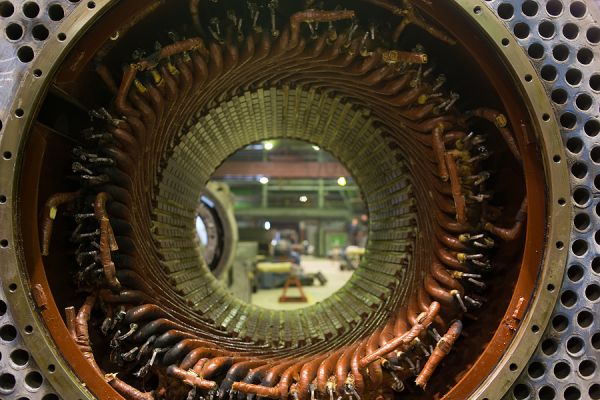
Electric motors have long been indispensable in powering the industrial equipment we rely on today. Among the key components of a motor, the rotor plays a critical role in determining performance, service life, and operational safety. The smooth rotation of this component depends heavily on dynamic balancing, which is a process that corrects uneven mass distribution during high-speed operation.
One of the most frequently asked questions in this area is whether the effectiveness of dynamic balancing is influenced by the speed at which the balancing process is carried out. To answer this, it is essential to examine the fundamentals of rotor balancing for electric motors, the role of speed in the balancing process, and how it impacts the final results.
What is Rotor Dynamic Balancing in Electric Motors?
Dynamic balancing refers to the process of correcting imbalances across multiple planes of a rotating component. Unlike static balancing, which only addresses imbalance in a single plane while the rotor is stationary, dynamic balancing evaluates and corrects imbalance while the rotor is spinning. This distinction is crucial, especially in high-speed motors, where even minor discrepancies can translate into severe vibration, noise, or mechanical failure.
Imbalances arise from asymmetric mass distribution about the axis of rotation. This asymmetry generates centrifugal forces that cause vibration during operation. By rotating the rotor and using highly sensitive instruments, technicians can detect these imbalances and correct them, typically by adding or removing weight. The goal is to align the effective mass centre with the axis of rotation. When this alignment is achieved, residual centrifugal forces are eliminated, and the rotor spins smoothly.
In reality, a rotor can exhibit an infinite number of imbalances along its axis. These can be simplified into two resultant unbalances acting in arbitrary planes with varying magnitudes. Because these conditions only become fully apparent when the rotor is in motion, they are referred to as dynamic unbalances, which can only be effectively corrected through two-plane balancing techniques.
For industries that depend on electric motor rewinds to extend the life of existing equipment, achieving proper rotor balance is vital. Failure to address imbalance can lead to persistent vibration, increased wear on bearings, energy inefficiency, and eventual breakdown of critical machinery.
Why Rotor Balance Matters
The implications of imbalance don’t just lead to operational noise or minor inefficiencies. Uncorrected rotor imbalance can shorten the lifespan of a motor, result in unscheduled downtime, and increase maintenance costs. Excessive vibration places strain on surrounding components such as bearings and seals, often leading to cascading failures across an entire system.
From a safety perspective, imbalance also poses risks. In high-speed machinery, vibrations may trigger mechanical resonance, creating conditions where structural failure becomes more likely. In industrial environments where safety and reliability are paramount, achieving effective dynamic balance is therefore non-negotiable.
How Speed Impacts the Dynamic Balancing Process
Speed is a decisive factor in the success of rotor balancing. During the process, operators must select an appropriate calibration speed, and this decision is far from arbitrary. The chosen speed determines the accuracy of imbalance detection and the validity of the final correction.
Balancing at Slower Speeds
Dynamic balancing is often performed at lower speeds. At these reduced levels, the centrifugal forces caused by imbalance are smaller, which allows for more stable measurements. Lower-speed balancing minimises the risk of excessive vibrations that could interfere with detection accuracy or damage equipment during testing. It is particularly suitable for rigid rotors and motors that operate under moderate conditions.
Balancing at Higher Speeds
For high-speed motors, however, low-speed balancing may not provide a complete picture. As speed increases, centrifugal forces grow exponentially. The rotor also encounters aerodynamic effects and can display different structural vibration modes. These behaviours are not apparent during low-speed testing. Therefore, for high-speed applications, balancing at or near the motor’s actual operating speed becomes essential to validate the results.
Advancements in modern balancing equipment have significantly improved this process. Today’s dynamic balancing machines are capable of simulating real operating conditions, adjusting speeds, and even performing multi-point corrections across different ranges. Digital measurement systems now enable real-time monitoring, ensuring highly precise correction schemes and reliable outcomes.
The Influence of Speed on the Final Balancing Effect
Besides the accuracy of the equipment used, the final quality of dynamic balancing also depends heavily on the chosen speed during balancing. Different speeds result in different changes to a rotor’s dynamic characteristics, particularly when the motor runs at high speeds. The rotor’s rotational inertia, vibration modes, and other factors can have a significant influence on the balancing results.
Where Low-Speed Balancing Falls Short
Although balancing at low speeds is practical and reduces risk during testing, it may fail to capture the rotor’s true behaviour at operating speed. A rotor that appears stable at low speeds may exhibit significant imbalance once pushed to higher rotations. This discrepancy may arise from changes in rotor stiffness, material flexibility, or air resistance effects at elevated speeds. As such, low-speed balancing may not be sufficient for motors that function at high performance levels.
The Importance of Operating Speed
To ensure reliability in real-world use, the balancing process must account for the operating speed of the motor. This is especially critical for high-performance or heavy-duty motors, where the dynamic behaviour of the rotor shifts dramatically as speeds climb. Balancing near the actual operating speed provides assurance that the correction will hold under real working conditions, minimising vibration and extending operational life.
On a related note, in industries where generator maintenance is essential to preventing costly power failures, ensuring that high-speed rotors remain balanced is particularly important. An imbalance at working speeds could compromise not only efficiency but also the stability of entire systems dependent on steady energy output.
Key Principles for Selecting Balancing Speed
When determining the balancing speed, several practical principles should guide the process:
- Operating Speed Range: The closer the balancing speed is to the motor’s actual operating speed, the more representative the results will be. This is particularly true for high-speed motors.
- Material and Vibration Characteristics: Factors such as material elasticity and aerodynamic properties must be considered. Some materials deform slightly at high speeds, altering imbalance behaviour.
- Rotor Structure: The type of rotor, rigid or flexible, also determines speed selection. Flexible rotors often demand balancing at or near operational speeds, whereas rigid rotors can usually be balanced at lower speeds without compromising accuracy.
Carefully evaluating these variables allows technicians to ensure that the balancing process produces long-lasting results that match the motor’s real-world demands.
Conclusion
Dynamic balancing is essential for ensuring the smooth, reliable, and safe operation of motor rotors. While balancing equipment and precision measurement systems are critical, the speed chosen during the process is equally important in determining the final outcome. Overall, the relationship between balancing speed and the final effect underscores a simple truth: balancing must be tailored to the realities of motor operation. Aligning the process with the conditions a motor will face in the field is the first step towards reducing downtime, enhancing efficiency, and extending the service life of vital equipment.