
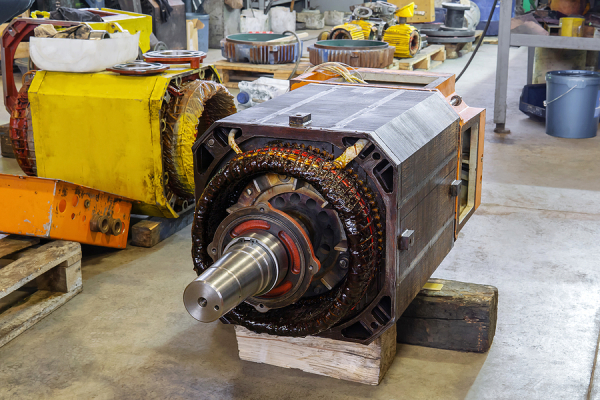
For decades, industries have relied on traditional condition monitoring techniques such as vibration analysis, thermography, and ultrasonic inspection to diagnose developing faults in electric motors. While undoubtedly effective, these approaches often require direct access to the motor or involve specialised sensors that may not always provide a complete picture of its operating condition. As such, newer techniques like motor current signature analysis (MCSA) have gained recognition as an efficient alternative.
MCSA focuses on analysing the electrical current drawn by a motor to detect anomalies that signify underlying mechanical or electrical issues. Subtle variations in current patterns, which might otherwise go unnoticed, can reveal developing problems such as bearing defects, rotor bar fractures, or air gap eccentricities. By detecting these indicators early, maintenance teams can intervene before minor issues escalate into major failures, thereby reducing downtime, avoiding costly repairs, and improving equipment reliability.
This article explores what MCSA is, how it works, its applications, and the benefits it brings to predictive maintenance strategies.
What is Motor Current Signature Analysis?
Motor Current Signature Analysis is a non-invasive diagnostic method that examines the frequency-domain characteristics of the electrical current drawn by a motor. The underlying principle is that the motor’s current is directly related to its operating condition and load behaviour. Any change in mechanical or electrical health will introduce distinctive signatures or disturbances in the current waveform.
The process typically involves:
1. Measurement – Current is captured using sensors such as current transformers or Hall-effect devices.
2. Acquisition – The signal is digitised through data acquisition systems.
3. Processing – Advanced signal processing techniques extract features from the data.
4. Interpretation – The resulting patterns are compared against baseline signatures of healthy motors and known fault conditions.
One of the key advantages of MCSA is that it does not require physical attachment of sensors directly onto the motor housing, unlike vibration analysis. Current sensors can be placed within the motor control cabinet, making the technique highly suitable for motors operating in inaccessible or hazardous environments.
MCSA is considered part of electrical signature analysis (ESA), a broader diagnostic category that also encompasses voltage signature analysis and motor circuit analysis. Beyond motors, ESA techniques can be extended to other electrical assets such as transformers and generators, providing a versatile toolkit for predictive transformer and generator maintenance programmes.
Applications of Motor Current Signature Analysis
The value of MCSA lies in its versatility. It has applications across multiple domains of condition monitoring and predictive maintenance, including:
Fault Detection and Diagnosis
MCSA is particularly effective in identifying a wide spectrum of faults, both electrical and mechanical in nature. Commonly detectable issues include:
- Broken rotor bars – Typically identified by sidebands around the supply frequency.
- Air gap eccentricity – Caused by uneven spacing between stator and rotor, reflected in low-frequency components.
- Bearing faults – Produce high-frequency components due to surface wear or localised defects.
- Misalignment – Characterised by low-frequency variations linked to the improper alignment of motor and load.
- Unbalance – Indicated by specific frequency components linked to uneven weight distribution.
Early detection of these conditions allows maintenance teams to schedule interventions before faults escalate, ensuring operational continuity.
Condition Monitoring and Predictive Maintenance
MCSA excels in the ability to monitor motor health continuously. Instead of adhering to rigid maintenance schedules, industries can adopt predictive maintenance, servicing equipment only when necessary.
Key benefits include:
- Reduced downtime – Interventions can be aligned with planned shutdowns.
- Improved reliability – Identifying faults early helps prevent catastrophic failures.
- Cost savings – Avoiding unnecessary routine servicing lowers maintenance expenditure.
Predictive strategies are particularly relevant for facilities where motors form the backbone of operations, such as in manufacturing, power generation, and water treatment. In some cases, adopting MCSA in tandem with other practices, such as electric motor rewinds in Singapore, provides a comprehensive approach to extending motor life and optimising performance.
Performance Optimisation and Energy Efficiency
Apart from fault detection, MCSA contributes to performance improvement. Analysing the motor’s electrical signature provides insights into load distribution, control strategies, and overall efficiency. By identifying inefficiencies, operators can make informed adjustments to improve energy consumption, optimise motor controls, or balance loads more effectively. This not only enhances performance but also reduces operating costs.
Implementing Motor Current Signature Analysis
Establishing an effective MCSA framework requires a combination of appropriate hardware, software, and skilled interpretation.
1. Hardware Components
- Current sensing devices such as current transformers or Hall-effect sensors.
- Data acquisition systems (DAQ cards or industrial DAQ units) to convert analogue current signals into digital data.
- Computing platforms ranging from PCs to industrial computers, depending on the monitoring scale.
2. Software Components
- Signal processing tools such as MATLAB, LabVIEW, or Python libraries.
- Specialised MCSA analysis software or proprietary platforms integrated into condition monitoring systems.
3. Signal Processing Techniques
Several mathematical techniques are employed to extract meaningful patterns from current signals:
- Fast Fourier Transform (FFT) – Breaks down time-domain signals into their frequency components, ideal for identifying periodic anomalies.
- Short-Time Fourier Transform (STFT) – Provides time–frequency representations, useful for transient events.
- Wavelet analysis – Offers multi-resolution analysis to capture both low and high-frequency features.
4. Interpreting Results
The diagnostic phase requires expertise in distinguishing between signatures of normal operation and those indicative of faults. For instance:
| Issue | Description | Typical Signature |
| Broken rotor bars | Cracks or breaks in rotor bars | Sidebands around fundamental frequency |
| Air gap eccentricity | Uneven stator–rotor spacing | Low-frequency components |
| Bearing faults | Wear or pitting on bearings | High-frequency spikes |
| Misalignment | Motor–load shaft misalignment | Low-frequency disturbances |
| Unbalance | Load imbalance | Characteristic frequency harmonics |
Such interpretation forms the bridge between raw data and actionable insights, making skilled analysts integral to any MCSA programme.
More importantly, while MCSA is powerful, it should not be viewed in isolation. Integrating it with other diagnostic techniques, such as vibration monitoring, thermal imaging, and lubrication analysis, creates a more comprehensive maintenance ecosystem.
Conclusion
Motor Current Signature Analysis represents a significant advancement in condition monitoring. By focusing on the electrical signature of motors, it allows non-invasive detection of developing faults that traditional methods may miss. Its applications extend beyond fault detection to predictive maintenance, energy optimisation, and integration with wider maintenance frameworks.
As industries continue to adopt smarter maintenance practices, MCSA offers an invaluable tool for anticipating problems before they arise, ensuring motors and associated systems operate efficiently, reliably, and cost-effectively.